
Hand Pain, Stiffness, or Numb Fingers?
~Dr. Lou Jacobs – Musician and Performing Artist Specialist – Portland, Maine
In my musician specialty practice here in Portland, we see a lot of hand and wrist issues that are attributed by the musician, to playing. While this post covers the hand and fingers, future posts will be more specific to fingers. Many times your music is a heavy contributor, and other times it’s just a small piece of what is creating the aches and pains in the hands. As I say in nearly every post, just because you have an activity that is easy to blame for your aches and pains, doesn’t mean that it’s the sole contributor. If you can uncover other activities that also contribute, and then correct them, you can leave your music alone, continue to play the way you like, and without the risk or injury. Sometimes….
Why Musicians Shouldn’t “Wait It Out”
If you’re a musician dealing with hand pain, stiffness, weakness, tingling, or reduced sensation, you’re not alone—and you’re not imagining it. These symptoms are common among instrumentalists, but they’re rarely caused by just playing music.
Here’s the part most musicians miss:
Your instrument may trigger the problem—but your daily life often keeps it going. If you have a day job and other hobbies and responsibilities, you are likely perpetuating your complaints with seemingly harmless Activities of Daily Living or ADL’s.
Waiting to “see how things go” is one of the fastest ways a minor, reversible issue becomes a stubborn, career-limiting one.
Let’s connect the dots.
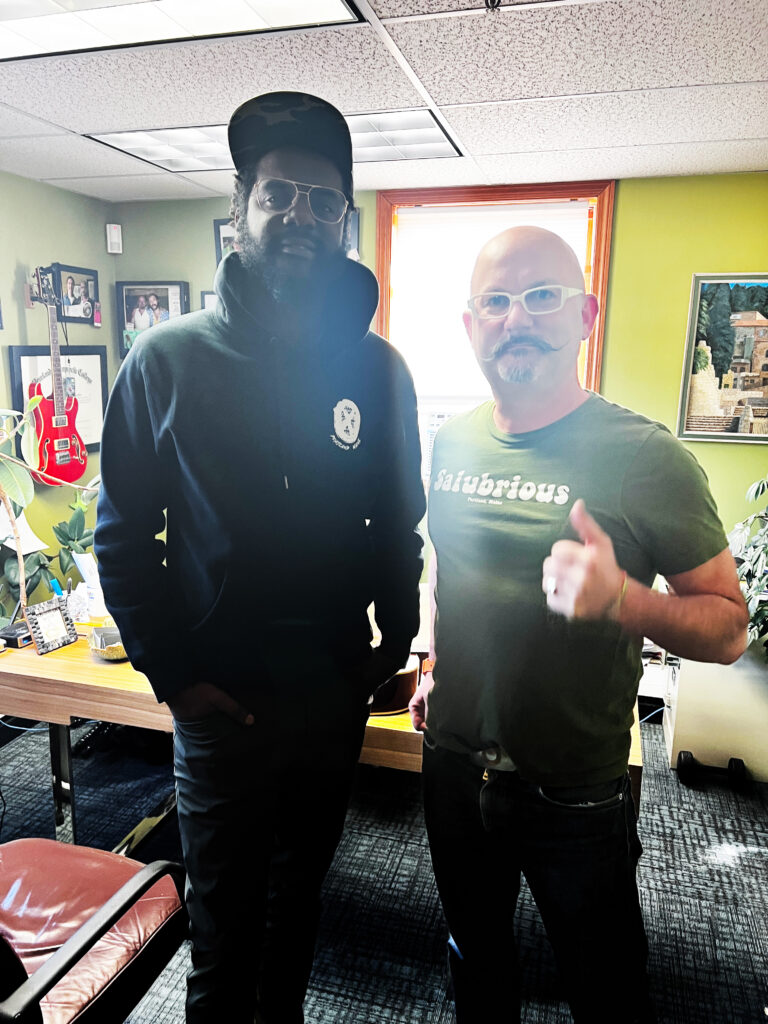
Dr. Lou with Gary Clark Jr. at his office in Portland, Maine
The Most Common Hand-Related Diagnoses in Musicians
Musicians tend to hear the same diagnoses over and over. They almost always fall under the category of PRMD’s or Playing Related Musculoskeletal Disorders:
-
Tendinitis / tendinopathy (flexor or extensor tendons)
-
Carpal tunnel syndrome
-
Cubital tunnel syndrome
-
De Quervain’s tenosynovitis
-
Trigger finger
-
Thoracic outlet–type nerve compression
-
Cervical nerve irritation affecting the hands
-
Early repetitive strain injury (RSI)
These are descriptions, and by definition only partial explanations.
They don’t specifically tell you why the problem started in your life—or why it isn’t going away.
Music-Related Risk Factors (The Obvious Culprits)
Your instrument places highly specific demands on your hands and nervous system:
-
Sustained finger flexion or extension while under pressure
-
High repetition with few breaks and rests
-
Forceful fretting, bowing, gripping, or striking while performing very specific actions
-
Awkward wrist angles dictated by technique or instrument size
-
Long rehearsals layered on top of performance stress in some cases, and often on top of a “day job”
-
For the professional recording artist: Poor load management during tours, recording weeks, or gig clusters
These stressors alone can irritate tissue—but they don’t always explain persistent symptoms, unless you are playing all the time, or with extraordinary intensity.
Activities of Daily Living (The Often Silent Perpetuators)
This is where most musicians lose the plot. Which admittedly, is easy to do if your “ADL” are not on your radar.
The same structures stressed while playing are quietly overloaded all day long by:
-
Phones and tablets (thumb flexion, neck-driven nerve tension)
-
Lifting kids, groceries, instrument cases, amps, pets
Music may be the match. ADLs are often the gasoline.
Just so you know, you can rest from playing for weeks—and still make no progress if these factors aren’t addressed.
Why Symptoms Spread, Change, or Become Confusing
Many musicians notice:
-
Pain that moves around
-
Numbness that comes and goes
-
Weakness without clear injury
-
Symptoms worse in the morning—or after rehearsal
-
One hand affected… then both
This happens because hands don’t work independently.
They’re controlled by:
-
The cervical spine
-
The brachial plexus
-
Peripheral nerves
-
Sensorimotor feedback loops in the brain
Research shows altered sensory input and motor control play a significant role in repetitive hand disorders—not just local tissue irritation (Haavik & Murphy, 2012; Schmid et al., 2013).
If care only chases pain at the wrist or fingers, the root problem is often missed.
Why Waiting Makes Things Worse
Musicians are especially prone to delaying care because:
-
“It’s not that bad yet”
-
“I can still play”
-
“I’ll deal with it after this run of gigs”
-
“I don’t want to make a big deal out of it”
Here’s the reality:
-
Early-stage nerve and tendon irritation is highly reversible
-
Chronic changes are slower, more stubborn, and more limiting
-
The nervous system adapts—sometimes in unhelpful ways
Waiting doesn’t create clarity.
It creates compensation.
How a Musician Health Specialist Approaches the Problem Differently
In our Portland, Maine practice, we don’t treat “hands in isolation.”
I evaluate:
-
How your instrument loads your system (we have an “observation studio” in-house.)
-
How your daily life reinforces the same stress patterns
-
Cervical spine and shoulder mechanics
-
Nerve mobility and sensory changes
-
Motor control—not just strength
-
Recovery gaps between load exposures
Care stays strictly within chiropractic and chiropractic acupuncture scope with additional ancillary tools and focuses on:
-
Reducing mechanical and neurological interference
-
Restoring joint and nerve motion
-
Improving sensory input and motor control
-
Modifying both playing habits and daily stressors
-
Helping you keep playing—more comfortably and confidently
No guesswork. No “wait and see.”

The musician “Observation Room” at our clinic.
The Takeaway
Hand pain, restriction, and numbness are not moral failures, weakness, or “just part of playing.”
They’re signals.
The sooner those signals are understood—and addressed across music and daily life—the easier they are to resolve.
If your hands matter to your livelihood, creativity, or identity, delaying care is rarely a wise decision.
Dr. Lou Jacobs, Chiropractor and acupuncturist in Portland, Maine, has been working with and specializing in the health and performance of musicians of all types, for over 23 years. His work has been highlighted in Guitar Player Magazine, and his client list is extensive, having worked with some of the best horn players in the world today. Dr. Lou is always accepting new patients and offers tele-consulting for musicians outside of Southern Maine. Dr. Lou also works with families and is board certified in chiropractic care for children and pregnant moms. Dr. Lou may be reached by calling (207) 774-6251 or by messaging his office manager, Sandra Escobar, at Sandra@DrLouJacobs.com.