
Can you heal while playing? What to expect.
If you’re a working musician, “just rest it” isn’t practical advice, any more than not practicing and seeing how the show goes, works.
You’ve got gigs, rehearsals, teaching, touring—and your livelihood likely depends on showing up and making people happy. You want your audience to leave and talk about how great you were, not about how painful it was to watch you work through your own pain.
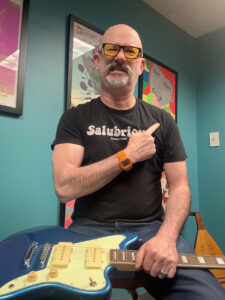
Musician Pain and Healing Expectations – Portland, Maine
So let’s be crystal clear about what you’re dealing with:
You’re trying to heal while continuing to stress the very tissue that’s injured.
That changes everything about the healing process—and your expectations need to reflect that.
First, Let’s Talk About What’s Actually Injured
Most playing-related injuries fall into the category of repetitive stress injuries (RSIs)—not sudden trauma, but micro-damage over time. They are also known as Playing Related Musculoskeletal Disorders (PRMD)
Common examples I see in musicians:
- Lateral epicondylitis (tennis elbow) – common in guitarists, violinists, drummers
- Shoulder impingement – especially in string players, drummers, pianists
- Neck pain and tension syndromes – nearly universal across instruments
These are not random. They are predictable outcomes of repeated movement, load, and posture.
What’s happening in your body?
Think of soft tissue like a rope:
- Healthy tissue = flexible, organized fibers that glide smoothly
- Injured tissue = frayed, irritated, and starting to stick together
Three key processes are at play:
1. Inflammation (The Early Alarm System)
- The body increases blood flow and chemical activity
- You feel pain, heat, swelling, stiffness
- This is necessary—but too much or too long = delayed healing and degeneration of tissue.
2. Adhesions & Scar Tissue (The “Quick Fix” That Causes Problems)
- Your body lays down collagen quickly—but not neatly – like a glue to hold torn rope together.
- Fibers become disorganized and sticky
- Tissues stop gliding → movement becomes restricted
3. Restricted Range of Motion
- Joints don’t move fully or smoothly
- Muscles compensate
- Receptors that are triggered by movement to communicate with your brain about what’s going on, stop working as well with limited movement.
- You start playing differently—often without realizing it
That’s when technique breaks down and secondary injuries begin.
What Healing Looks Like When You Can’t Stop Playing
Here’s the truth most people won’t tell you:
If you keep playing, your injury will improve more slowly. Period.
But that doesn’t mean you’re stuck, and it doesn’t mean you shouldn’t keep playing. What do I mean? If you don’t play for two months while you heal, what is going to happen when you return to the very activity that caused your injury in the first place? It will often be much more likely to return. If you keep playing and are able to get better within the realm of your normal life (playing), when you “get better” you will be ready to rock and roll.
In other words, you need smarter expectations and better strategy.

Impatience sometimes leads to surgery.
Reasonable Expectations
- Pain may not fully disappear between sessions
- “Cooldown” time after playing will be longer than you want
- You may feel tight or limited at the start of playing
- Progress will be non-linear (good days and bad days)
This is not failure.
This is healing under load.
The Most Common Mistake Musicians Make
Let me say this clearly:
Masking symptoms is not the same as healing. Sometimes it’s necessary in the form of pain killers, but it’s not a solution.
What that looks like:
- Taking anti-inflammatories just to get through a gig
- Ignoring early warning signs
- Playing through increasing restriction
- Waiting until the off-season (which often never really comes)
This approach leads to:
- More scar tissue (feeling better from anti inflammatories doesn’t heal scar tissue)
- More compensation patterns – higher risk of future injuries
- Longer recovery timelines – more accumulation of stress on top of injuries
- Higher risk of chronic injury – chronic injury/illness kills careers. Think Celine Dion and Brian Setzer.
What Actually Works: Build Capacity, Don’t Just Survive
If you’re going to keep playing, and most of you are, then the goal shifts:
You don’t just reduce pain. You build resilience.
That means:
- Improving tissue quality
- Restoring joint motion
- Increasing load tolerance
- Supporting recovery between sessions
Practical Focus Areas
1. Improve Tissue Mobility
- Break up adhesions (RapidReleaseTech.com)
- Restore glide between muscle layers
- This directly improves movement efficiency
2. Restore Joint Motion
- Especially in:
- Elbow (for lateral epicondylitis)
- Shoulder (for impingement)
- Cervical spine (for neck pain)
Restricted joints = overloaded soft tissue.
3. Gradual Strength & Load Adaptation
- Tissue must be trained to tolerate playing demands
- Not just rested
4. Smarter Recovery Windows
- Expect longer “cool-down” periods
- Use targeted strategies immediately after playing:
- Movement (not just rest)
- Circulation support
- Gentle mobility work
Why Timing Matters: Don’t Wait Until After the Busy Season or you may not have a slow season
Here in Portland—and across Maine and New Hampshire—many musicians ramp up around:
- Summer festivals
- Holiday performances
- Touring blocks
And I see the same pattern every year:
“I’ll deal with it after the busy season.”
That’s exactly how small problems become career-limiting ones.
Early Action Does Three Critical Things:
- Reduces the amount of scar tissue that forms
- Prevents compensation patterns
- Shortens total recovery time
The earlier you address it, the less you have to undo later.
A Better Way to Think About Injury
Instead of asking:
“How do I get through this gig?”
Ask:
“How do I get through this and other gigs and keep playing for the next 10–20 years?”
That shift changes everything from a long-term outcomes point of view
Final Thoughts
You really don’t need to choose between:
- Your career
- And your health
But you do need to be strategic.
Healing while playing is possible—but it requires:
- Realistic expectations and patience
- Consistent support and action
- A focus on building function—not just masking pain
If you’re dealing with elbow pain, shoulder restriction, or neck tension, don’t wait for it to “settle down.”
It rarely does on its own, especially when you choose the path to continue to play.
If This Sounds Like You
In my Portland practice, I work with musicians who need:
- Direct access to their doctor
- A plan that fits their performance schedule
- Clear, honest guidance—not guesswork
If you’re ready to address the problem and keep playing at a high level, that’s exactly where we start.
Dr. Lou Jacobs, Chiropractor and acupuncturist in Portland, Maine, has been working with and specializing in the health and performance of musicians of all types, for over 23 years. His work has been highlighted in Guitar Player Magazine, and his client list is extensive, having worked with some of the best horn players in the world today. Dr. Lou is always accepting new patients and offers tele-consulting for musicians outside of Southern Maine. Dr. Lou also works with families and is board certified in chiropractic care for children and pregnant moms. Dr. Lou may be reached by calling (207) 774-6251 or by messaging his office manager, Sandra Escobar, at Sandra@DrLouJacobs.com.
References (general scientific context):
- Khan KM et al. (2002). Time to abandon the “tendinitis” myth. BMJ.
- Schleip R et al. (2012). Fascia as a sensory organ. Journal of Bodywork and Movement Therapies.
- McGill SM (2016). Low Back Disorders (movement and load principles broadly applicable to spine care)