
Perry Farrell – 2020 Spine Surgery – Voicebox Removed!

Musicians and Neck Surgery Perry Farrell, lead singer of the iconic alt-rock band Jane’s Addiction, underwent surgery in 2020 for a cervical spine disc issue caused by years of head banging while on stage. The surgery, was a success and Farrell has since made what appears to be a full recovery Can Head Banging Cause Neck Damage? Yes. Of course it can. Head banging is like a series of mini whiplashes over the course of an entire concert. Muscle, ligament, and tendon sprain-strain injuries are most likely. In more longterm severe cases, herniated discs may manifest. It is important to think of consequences before engaging in an activity that could lead to long-term health issues and even surgical mishap disability, even death. “Consider Potential Consequences.” ~Dr. Lou If you don’t know the consequences or mechanisms leading to consequences, that’s what people like “Dr. Lou” are for. A large part of my consulting with musicians online is trying to avoid, or modify behaviors that could lead to unwanted long-term health issues and risk factors. Farrell had been dealing with spinal issues for some time, and the surgery was deemed necessary to alleviate the pain and discomfort he had been experiencing in his...
read moreCeline Dion – Stiff Person Syndrome – Dr. Lou
Stiff Person Syndrome (SPS) Tremendous attention is being paid to “Stiff Person Syndrome” since the diagnosis for Celine Dion. To understand SPS, you must first understand how to flush a toilet. You see, as you apply pressure to the handle on the toilet, a small rush of water will begin to flow, and if you push harder, you’ll get even closer to the toilet flushing! More downward pressure on the handle takes you right to the very moment, the closest a moment can get, to flushing, without actually flushing. Nothing has flushed, and then you apply the lightest teensy-weensy bit of pressure and it pushes the handle over the edge, the floodgates open and the toilet flushes. Simply put, stress works the same way. More pressure and there are signs that the toilet will eventually flush, but it doesn’t flush just then. It’s not until there is just enough stress (pressure) to take you to the very moment, the closest a moment can get to being THE moment when your body shuts down. SPS is not fully understood. This means its cause is not fully understood. It is very rare, and more common in women. Stiff-person syndrome (SPS) is...
read moreSnap, Crackle, Pop! What is that “popping” noise?
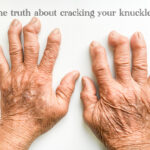
What is that Popping Sound? By the team at Haavik Research If you have been adjusted before by a chiropractor you may have noticed a popping sound, that may seem a little strange. Many people think all kinds of strange things about this popping sound, so let’s set the record straight. The popping sound is only the formation of gas within a joint, and it’s no more significant than any other gas release from the body. The popping sound does not mean that you’re getting arthritis. A number of studies have looked at people who have routinely cracked their knuckles for years and years and compared them to non-knuckle crackers to see if there’s any difference in x-ray images of their hands.(1) These studies all came back with the same conclusion. Habitual knuckle cracking over the course of several decades is not associated with clinical or radiographic evidence of osteoarthritis. Of course you could argue that the spine is part of your weight bearing system and hands are not, so you could ask can you really compare the two? But all the evidence that is available suggests that cracking joints has nothing to do with causing arthritis. The popping...
read moreFinger Cramping – Guitar – Bass – Banjo – Ukulele – Violin – Cello

Guitar Player Finger Cramps Finger cramps will put a stop to your playing, and can be really painful. They are common in players who play hard, play long, and are predisposed to cramping. If you are reading this, you’ve likely already read a bunch, tried a bunch, and nothing has worked. It’s time to look at “PERPS”. What is a PERP? A perp in the world of music injuries is not a perpetrator, but rather a perpetuator. What I’m about to tell you is missed by many doctors. Sometimes the cause of your problem is less important than what keeps the problem going, and they are not the same thing. Your body wants to heal, it is designed to heal itself. When it is not capable of healing itself or avoiding recurring pain, or in this case finger cramps, we have to ask ourselves a question. Why is it that not all guitarists get finger cramps, and what in my life, could be leading to this recurring problem for which resolution seems impossible. Common perpetuating factors are things like: Day Jobs Sleep positions Previous accidents or injuries Power tool use Video games Gardening Working out Motorcycles and bikes Sports...
read moreHank Williams – A Story of a musician, Chronic Pain, Doctors, and Addiction

Hank Williams – A Story of a musician, Chronic Pain, Doctors, and Addiction Hank Williams is often considered to be one of the most influential singers, songwriters, and musicians of the 20th century. His life was cut short at the age of 29, on January 1, 1953. If by some miracle, he were still alive today, he would be 99 years old. Hank Williams suffered from debilitating back pain for a good part of his life. It is reported that in 1941 he suffered a back injury after falling from a bull during a rodeo. Prior to the injury in Texas, beginning in the late 1930’s, Williams had already started drinking. Some sources say he started drinking heavily at age 13. It has also been reported that his substance abuse worsened dramatically in the presence of low back pain. In late 1951, Hank Williams fell while hunting, and his back pain returned with a vengeance. It was bad enough that painkillers like morphine and alcohol became his medicine to ease the pain. On December 13, 1951, a little over 1 year before his death, he had spinal fusion surgery at Vanderbilt University Hospital. He was only 28 years old...
read more