
Huang Qin for Lyme Disease Symptoms: How Chinese Medicine Supports Comfort, Balance, and Recovery.
Exploring the Traditional Role of Huang Qin in Chinese Medicine for Lyme Disease Symptoms
For most people living with Lyme disease, the journey can feel long and frustrating. We understand your frustration. Symptoms such as fatigue, body aches, joint discomfort, brain fog, sleep disturbances, and feelings of internal heat can persist even after conventional treatment. As a result, many people explore complementary approaches that may help support their overall well-being. Many have heard that Chinese medicine and acupuncture may help them manage symptoms.
One herbal ingredient that frequently appears in Traditional Chinese Medicine (TCM) formulas is Huang Qin (Scutellaria baicalensis), also known as Chinese Skullcap. For centuries, Huang Qin has been valued in Chinese medicine for its ability to help clear heat, calm inflammation-like patterns, and support balance within the body. This Chinese medicine is one of the most beneficial anecdotally among those who try it, which is why we keep it in stock at our office in Portland.
In this post, we’ll explore how Huang Qin is traditionally used, why it may be considered in Chinese medicine approaches for Lyme disease symptoms, and the experiences that have led many patients to seek it as part of a broader wellness plan.
What Is Huang Qin?
Huang Qin is a foundational herb in Traditional Chinese Medicine. Practitioners have traditionally used it to address patterns associated with:
- Excess heat
- Damp-heat accumulation
- Irritability and restlessness
- Inflammatory conditions
- Digestive imbalance
- Certain respiratory complaints
I know this can be a little confusing… But, according to TCM theory, Huang Qin is bitter and cooling in nature. It is believed to help clear excess heat from the body while supporting healthy function in multiple organ systems. These are principles in Traditional Chinese Medicine that can be a little confusing. Part of the reason they are important to mention though, is because these principles are not studied in western medical research, which often leads to very little conclusive western research on the claims made by Traditional Chinese Medicine.
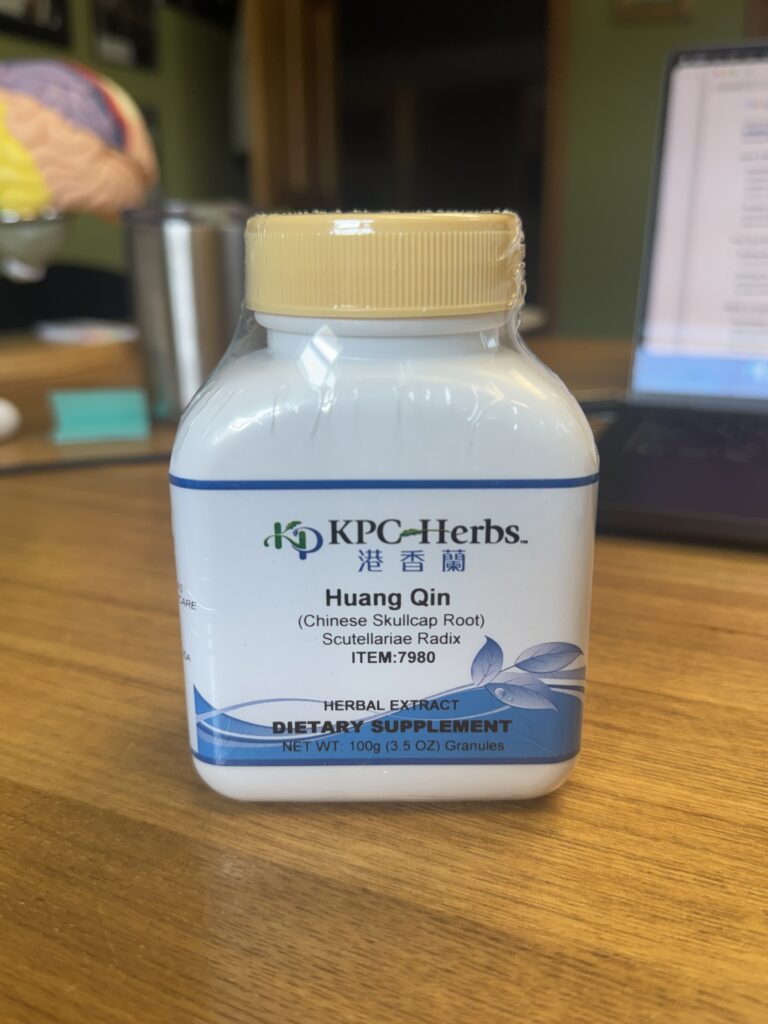
Huang Qin (Chinese SkullCap) – Available at Jacobs Chiropractic Acupuncture in Portland.
Why Is Huang Qin Considered for Lyme Disease Symptoms?
From a Chinese medicine perspective, Lyme disease symptoms may sometimes resemble patterns involving heat, dampness, toxin accumulation, or lingering inflammatory processes.
While TCM does not diagnose Lyme disease in the same way modern medicine does, practitioners often focus on the individual’s symptom pattern rather than the diagnosis alone.
Huang Qin may be selected when a person experiences symptoms such as:
- Persistent fatigue
- Joint discomfort
- Muscle aches
- Brain fog
- Restlessness
- Feeling overheated
- Sleep disturbances
- Generalized inflammation-like symptoms
The goal is not to “treat Lyme disease” directly, but rather to support the body’s overall balance and help address symptom patterns identified through Chinese medicine evaluation.
Patient Experience: Rachel’s Story
Rachel, a 42-year-old teacher, struggled with lingering fatigue and mental fog after being diagnosed with Lyme disease a few years back.
Despite making progress with conventional care, she still felt exhausted by mid-afternoon and found it difficult to concentrate at work – a common symptom.
After starting with TCM as well as regular chiropractic adjustments, she began a customized herbal formula that included Huang Qin along with a few complementary herbs which were added incrementally.
Within a few months, Rachel reported feeling more mentally clear and better able to manage her daily responsibilities. While she continued following her physician’s recommendations, she appreciated the additional support that Chinese medicine provided during her recovery journey.
Patient Experience: Marcus’ Story
Marcus, an active outdoor enthusiast, experienced recurring joint discomfort and stiffness that affected his ability to exercise.
After beginning chiropractic care to mobilize his joints and neck in particular, he was given an individualized herbal program containing Huang Qin because his presentation fit a pattern associated with internal heat and dampness in TCM.
Marcus reported that over time he felt more comfortable returning to regular physical activity and enjoyed improved overall well-being. He viewed Chinese medicine as one component of a comprehensive health strategy that also included medical supervision, nutrition, exercise and of course chiropractic care.
Patient Experience: Sophie’s Story
Sophies biggest challenge was poor sleep and feeling “wired but tired.” She frequently woke during the night and struggled with daytime fatigue.
Her Chinese medicine regimen included Huang Qin.
Several weeks after starting Huang Qin and activator methods chiropractic adjustments, Sophie reported improved sleep quality and a greater sense of calm. Although her symptoms did not disappear overnight, she felt very encouraged by the gradual improvements she experienced and the amount of improvement she did feel justified the effort for her.
What Modern Research Says About Huang Qin
Researchers have become increasingly interested in Huang Qin because it contains naturally occurring compounds such as baicalin and baicalein.
Laboratory studies have investigated these compounds for their potential biological activities, including antioxidant and immune-related effects. However, more high-quality human clinical research is needed before specific claims can be made regarding Lyme disease.
For this reason, Huang Qin should be viewed as a traditional herbal option used within the framework of Chinese medicine rather than a proven treatment for Lyme disease.
The Importance of Personalized Chinese Medicine
One of the most unique aspects of Traditional Chinese Medicine is its individualized approach.
Two people with Lyme disease may receive completely different herbal formulas because their symptom patterns differ.
A qualified practitioner may combine Huang Qin with other herbs to create a formula tailored to:
- Energy levels
- Sleep quality
- Digestive health
- Joint symptoms
- Emotional well-being
- Overall constitution
This personalized strategy is one reason many patients appreciate working with experienced Chinese medicine professionals.
Is Huang Qin Right for You?
If you are dealing with Lyme disease symptoms and are interested in exploring Chinese medicine, Huang Qin may be one herb that your practitioner considers as part of a comprehensive herbal formula.
Many patients seek Chinese medicine because they want additional support for their quality of life, energy, comfort, and overall wellness. While experiences vary from person to person, Huang Qin remains one of the most respected and frequently used herbs in traditional practice.
Living with Lyme disease symptoms can be challenging, but many people find value in a holistic approach that combines conventional medical care with complementary therapies.
Huang Qin has a long history in Traditional Chinese Medicine and continues to be used by practitioners seeking to support individuals experiencing fatigue, discomfort, and other symptom patterns associated with chronic health challenges.
Dr. Lou Jacobs has been a Chiropractor and practitioner of Traditional Chinese Medicine and Acupuncture in Portland, Maine for over 24 years. If you are stuck with health issues, call Dr. Lou for excellent listening, clear understanding, strategic action, scientific, real world expectations, and everything else that will give you the best chance of success in healing. It will be different, we promise. (207) 774-6251
Disclaimer: This article is for educational purposes only and is not medical advice. Huang Qin has not been proven to cure or treat Lyme disease. Always consult qualified healthcare professionals before starting any herbal supplement or treatment program.