
Lawn Care Destroyed My Life. Maine Lawn Care Lessons. Dr. Lou the Lawn Care Safety Man!

The Event That Changes Everything. It’s a little frightening to know that without an absolute knowledge of your body, at any given moment, you could have “the event that changes everything.” Now, to be fair, most of us will not experience this type of life altering subluxation or other meltdown. Lawn care and maintenance in the summer can be one of those activities that sticks it to you. Why lawn care? Because lawn care involves the “3 T’s”. The three T’s are thoughts, traumas and toxins. Thoughts: The mental stress that accompanies doing something you dread doing (Yard work) Traumas: The physical labor and stress of holding equipment, mowing, blowing, weeding, hedging, etc. Toxins: Gasoline fumes, stress hormones, inflammation chemicals and the like. Heavy, cumbersome equipment, the fact that you’d rather be hanging out with friends and family and the uptick in stress hormones all make you more vulnerable to a physical melt down. Sciatica, disc herniations, sprain strains, frozen shoulders and the like can be the result of overstressed yard work. Hold your leaf blower close to your body and use both hands to hold it. Don’t ever hold anything cumbersome and heavy, far away from your body....
read moreWhat is the problem with my back?

Back pain is one of the most common ailments in the U.S. It affects 80% of Americans Some sources say it costs Americans as much each year as cancer treatment. Wait a second, as much as cancer? It is such a common problem and it is so poorly managed by medicine, that yes, it’s that expensive. So what’s wrong with your back? Most commonly back problem areas boil down to joints, bones, muscles, nerves and discs. Very often it’s a combination of any of those and all of those. The spine and back are complicated because of the duties they perform. Upright posture, mobility and protection of the spinal cord. These are the big ones. All of these are critically important for normal human existence. Without them, life is really tough. REALLY TOUGH. If your problem is not more serious, like cancer or serious trauma (fracture), there is almost no doubt that the pain and dysfunction is from those aforementioned sources. How do you deal with joints and bones? Joints and bones become stressed through physical activity combined with poor alignment. This causes inflammation, degeneration and immobility. The key with joints is to keep them mobile, well lubricated and not inflamed. Joints...
read morePainful Joints and body pain in cold, wet, weather.

It’s “common” but not “normal”. Why does weather affect our joints and bodies? We have baroreceptors, like barometers, in our hearts, in our joints and throughout our bodies. These baroreceptors communicate to the body what’s happening in our environment and the brain creates a response. Damaged receptors don’t work well. If these receptors are in your knees or hips for example, the body’s response may be skewed, or may be appropriate but the joint is still dysfunctional. Either way, pain often increases. Let’s say that you have an injured knee that’s already misaligned and inflamed. When the weather is cold and damp the lubricating synovial fluid of the joint reduces in quantity. With less fluid in the joint, the misalignment and inflammation become more pronounced and the weather tips the pain “over the edge”. If your knee were not misaligned and inflamed already, this weather change wouldn’t bother your knee. If your hip joints are filled with inflammatory tenodonitis and the weather is damp and cold, these changes in environmental barometric pressure lead to an increase in inflammation in the ligaments and tendons, leading to more pain. It pushes your hips “over the top”. If your hip were in perfect...
read moreShoulder Injuries: Healing, Prevention, Optimization.
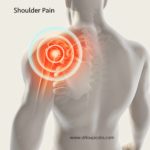
The Shoulder Injuries, Healing, Prevention and Optimization. Like with any problem with the body, it’s best to try and avoid it. Regular strength training and range of motion exercises for the shoulders will prevent problems. The shoulders are complicated joints, not because of the joint itself but because of the support system of muscles, ligaments and tendons. Most of the stability of the shoulder comes from the muscles and ligaments of the rotator cuff. The rotator cuff consists of 4 muscles. These muscles are Supraspinatus, Infraspinatus, Teres Minor and Subscapularis. The joints that comprise the shoulder are the ball and socket joint called the glenohumoral joint. The “AC Joint” or acromioclavicular joint is where the collar bone meets the shoulder. Maintaining mobility, keeping inflammation down and strengthening the muscles of the shoulder “complex” will reduce the likelihood of a shoulder injury. Common shoulder pain stems from bursitis, impingement, shoulder dislocation, ac joint separation and the dreaded “frozen shoulder”. Shoulder injuries often result from repetitive stress like pitching a baseball or adjusting chiropractic patients by hand. Traumatic injuries would be accidents like a fall down the steps or running into another football player. Rehabilitation of the shoulder with physical therapy, chiropractic...
read moreFamous Musicians Make This Face After Seeing Dr. Lou!

Musicians Love Dr. Lou – Chiropractor Guaranteed to have the focus of a master fiddler or pianist, Dr. Lou’s focus on the chiropractic adjustment is intense. Chiropractic adjustments must be performed specifically and with tremendous precision to do no harm and have the maximum positive impact on your nervous system. When top musicians travel through Maine and have issues, have had issues or need their regular chiropractic appointment, they call on Dr. Lou. Dr. Lou has over 15 years of experience working with musicians and their specific chiropractic needs. Musicians always make the same faces after their visits with Dr. Lou. Here are some examples. Musicians love Dr. Lou. Ours is a small office with a big heart. All of our patients smile after their adjustments. There’s more to healthcare than pills and scalpels. We aim to touch people’s lives in ways that go beyond just the “treatment”. Why is it important that Dr.Lou works with high profile musicians? Because his work must be flawless and in a very short time, Dr. Lou must show these performers that they can trust him to perform adjustments on them. It’s very important when choosing a chiropractor, to know that...
read more