
Prevent Face Wrinkles While You Sleep!

Face Wrinkles – Non-Surgical Prevention! Every night when you go to sleep, you may be adding wrinkles to your face if you do this one big no-no. The solution is simple and costs nothing. Not only is sleeping on your stomach a major cause of neck pain, shoulder pain and headaches, it also causes you to visually age more quickly. Solution: Stop Sleeping On Your Stomach. Not sleeping on your stomach is easier than you might think. My technique, explained in the video below, has helped hundreds, maybe thousands of people switch from their stomach to their back while sleeping. Imagine this. 8 hours a night of smashing your face against a pillow. Night after night, that pressure adds up and creates and accentuates wrinkles. Imagine this. You sleep on your back and while you are sleeping, your face wrinkles are decompressing and flattening out. Gravity to the rescue. The longterm effect of sleeping on your back may be a smoother face and will certainly reduce your risk of neck degeneration, pain, headaches, shoulder pain and tension. Don’t sleep on your stomach. Dr. Lou Jacobs is a chiropractor in Portland, Maine. He may be reached on twitter @drloujacobs or...
read moreSciatica Pain During Pregnancy
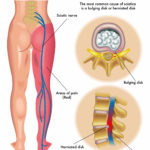
Sciatica Pain During Pregnancy. Immediate help available! The pain down the back of the leg that seems to start in your low back or glutes could be sciatica. During pregnancy the changes in pelvic and low back positioning can lead to pressure on nerves in the low back. The lower lumbar spinal nerves form the sciatic nerve. If your lumbar spine misaligns, if you have a bulging or herniated disc or have pressure of any kind on those nerves, you may feel sciatica pain. Sometimes, sciatica isn’t “real” sciatica. During pregnancy the muscles of your legs and glutes work extra hard. They get tight. If that tension, in the muscle, causes inflammation or pressure enough to compress the sciatic nerve underneath the piriformis muscle, you may have what’s called “piriformis syndrome.” Piriformis syndrome is much less serious than true sciatica pain coming from the low back, and it is often easily managed so that you are no longer suffering with leg and glute pain. Piriformis syndrome can be helped with trigger point therapy, perinatal chiropractic care and perinatal massage. Stretching and use of a Theracane at home is also very helpful. For a true sciatica, coming from the lumbar spine, perinatal...
read moreLow back pain during pregnancy.

Low Back Pain During Pregnancy According to a study published in the journal SPINE, the prevalence of back pain in pregnant moms over a 9-month period was 49%. As you know, your body during pregnancy changes quickly. All of these changes and redistributions of weight contribute to tension in muscles, strain on ligaments and often strain on joints that is typical but excessive on joints. With your baby growing, your low back muscles have to work harder to maintain your upright posture as your belly pulls you forward. This puts strain on your low back muscles – which may lead to muscle pain. The harder your muscles pull you back, the more compressed the joints of your low back become. This may lead to joint pain. To compensate for the new posture of the low back, your mid back (thoracic spine) arcs more, or hunches. The more it hunches, the more deconditioned the muscles of the mid back become and the tighter the muscles of your chest become. This may lead to mid back and upper back pain. As you hunch further forward, the more your head sticks out forward. This makes your head effectively weigh more and puts great strain on...
read moreSacroiliac Joint Pain During Pregnancy.

Sacroiliac Joint Pain During Pregnancy Sacroiliac joint pain (pain over the dimples in your low back), is extremely common during pregnancy. The pain is often achy, burning, sharp and deep feeling. The “SI Joint” as it’s often called is especially vulnerable during pregnancy because it is where the lower half of the body meets the upper half of the body at the sacrum. The joints on both side of the sacrum are large. When misaligned even a tiny bit, they cause great discomfort and significant inflammation. Why? because the area is very “locked in” with ligaments, tendon, connective tissue and muscle. Under normal circumstances the joints do move, but pregnancy puts additional strain on them, often pushing them over the line into the zone of pain and dysfunction. Will anti inflammatory drugs help? They may help with the inflammation, may help with pain, but I rarely encounter pregnant moms that want to take drugs. Additionally, medications don’t address the underlying joint dysfunction, just the pain. This leaves mom in a state of vulnerability where the slightest change in pelvic alignment or step down off a curb could trigger an SIJ meltdown. Going in to labor and delivery in pain is...
read moreTension Headache or Migraine Headache?

What kind of headache do you really have? You have to differentiate between a migraine and a tension type headache, which can be tricky with complicated headaches. Misdiagnosis, which is common, will lead to little or no relief and will also prevent you from seeking the right type of care. Typically, migraine headaches will be triggered by an issue with hormone changes, foods, food additives, alcohol, sensori stimuli like bright lights, strong smells, sleep disturbance and intense physical stress, barometric pressure change and medications and other chemicals. Headaches are often on one or both sides of the head, there may be an aura or visual disturbances, pins and needles in the arms or legs, facial weakness, difficulty speaking, etc. Tension headaches typically materialize as the day goes on. Mental, chemical and physical stress will cause them. This sometimes makes it harder to point at a trigger. They tend to present in the forehead or back of the skull. The headaches can also be “full head” headaches, and may get bad enough that they lead to triggering a more migraine like headache. If this happens, patients are often medicated, when what they need is stress management. What I often...
read more